
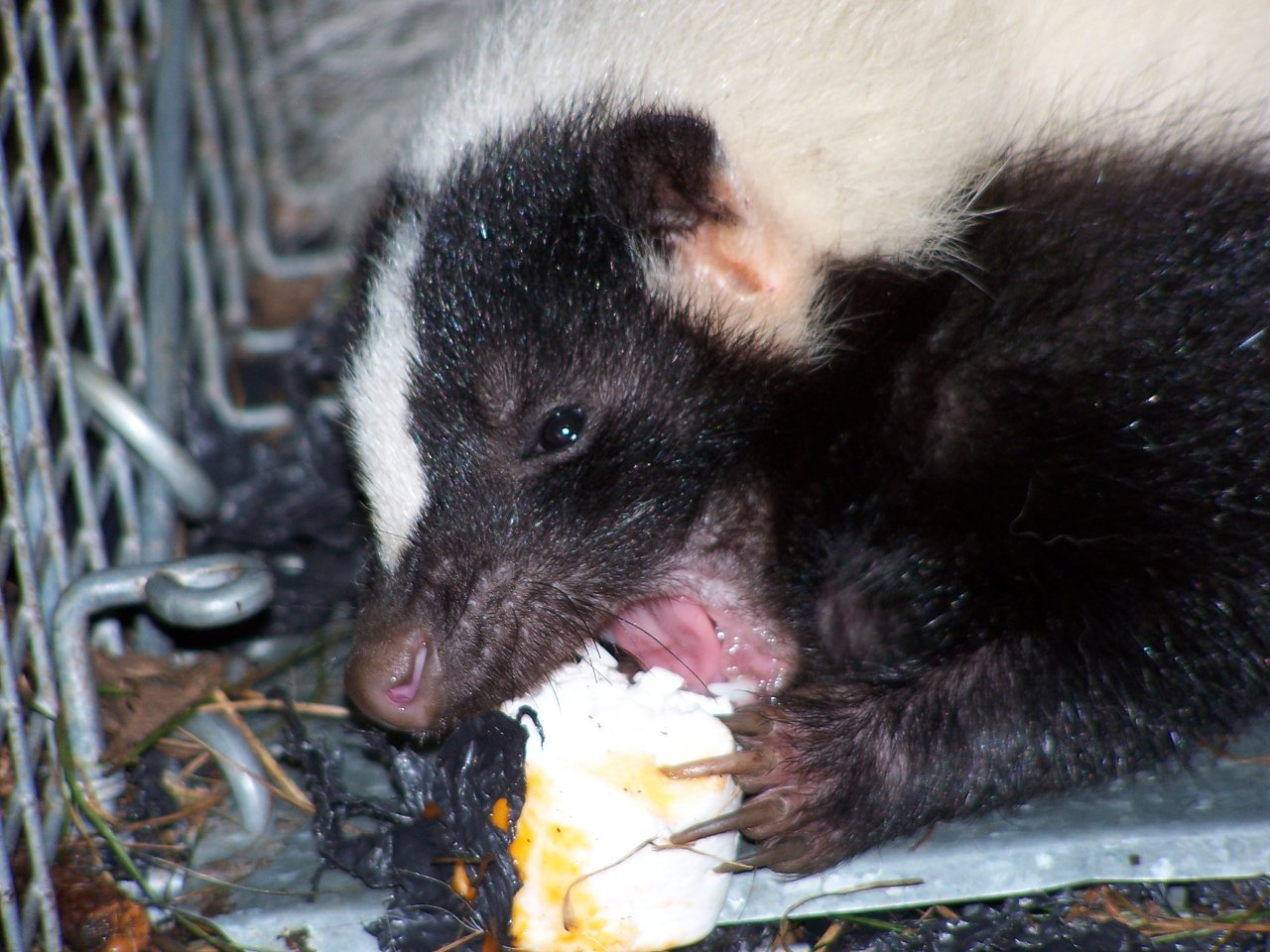
New Milford, with its mix of rural properties, wooded hills, farmland, and the Housatonic River running through town, sees consistently high wildlife activity across all seasons. Common issues include bats roosting in attics, skunks denning under decks and porches, raccoons breaking into chimneys and rooflines, squirrels nesting in soffits and eaves, woodchucks burrowing along foundations and stone walls, snakes around basements and rock features, and opossums taking shelter beneath sheds and outbuildings.
The size and layout of New Milford make it one of the most active wildlife areas in Litchfield County. With a population of roughly 28,000 spread across a large geographic area, there are countless properties that border woods, water, or open land — all of which create ideal conditions for wildlife to live and move undetected.
Housatonic Valley Wildlife Control handles wildlife removal throughout New Milford, where activity is especially common near Candlewood Lake, wooded residential neighborhoods, and properties along the Housatonic River corridor. These areas provide a steady water source, food availability, and natural cover, allowing wildlife populations to remain stable and active year-round.
Work in New Milford varies widely from lakefront homes and developed neighborhoods to remote rural properties toward Gaylordsville and surrounding areas. Larger lots, barns, detached garages, and outbuildings significantly increase the chances of wildlife problems, especially when combined with low human disturbance and nearby wooded cover.
Many homes in New Milford — particularly older structures — have aging rooflines, soffits, fascia gaps, and foundation openings that create easy entry points. Overhanging tree limbs provide direct roof access, while crawlspaces and stone foundations offer protected areas for denning animals. These conditions allow wildlife to enter, nest, and remain undetected for extended periods.
It’s also very common in New Milford to see multiple wildlife issues on the same property at the same time, especially on larger or rural lots. A single property may have squirrels in the attic, skunks under a deck, and woodchucks along the foundation — all contributing to ongoing damage if not properly addressed.
In one recent situation, a homeowner near the Housatonic River reported ongoing noise in the attic that had been dismissed for weeks. Upon inspection, the issue turned out to be a raccoon that had forced entry along a roofline gap and established a den site. Additional vulnerabilities were found along the soffits and eaves, which would have allowed further wildlife access if left untreated. Situations like this are common in New Milford, where structural wear combined with natural surroundings creates ideal conditions for repeat wildlife entry.
Proper wildlife control in New Milford requires more than just removing the animal — it requires a full inspection of the structure, identification of all entry points, and permanent exclusion work. Without addressing the underlying conditions, wildlife problems will continue to return.
Why Choose Professional Wildlife Removal in New Milford
- Built for rural and lake-area properties — larger wooded lots and barns allow wildlife to establish long-term den sites
- Proper exclusion methods — sealing is done with durable materials animals cannot reopen
- Humane and compliant — all work follows Connecticut regulations
- Long-term solutions — focused on prevention, not temporary fixes
Important: Most repeat problems happen because entry points are not fully sealed or incorrect materials are used.
Common Wildlife Removal Mistakes in New Milford
- Sealing holes before animals are removed
- Using foam or weak materials
- Missing secondary entry points
- Trapping without sealing
- Ignoring attractants like food or nesting areas
Bat Removal in New Milford, CT
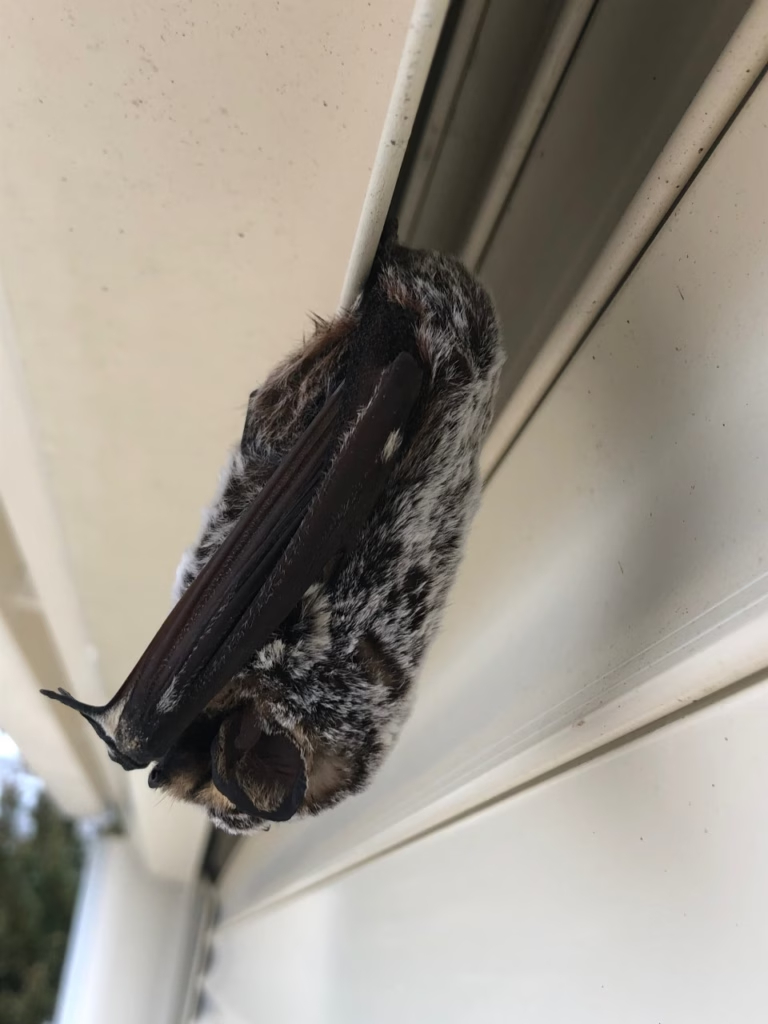
Bats are one of the most common attic wildlife problems in New Milford because older homes, wooded lots, and properties near Candlewood Lake and the Housatonic River often have the exact roofline vulnerabilities bats need. Ridge vents, soffits, flashing gaps, and small openings near the upper structure can all provide access to roosting areas.
Most bat problems occur along ridge vents, soffits, and roofline gaps — especially on older homes. Bats only need a very small opening to enter, and once they establish a colony in an attic, the infestation can continue for years if the entry points are not handled correctly.
Bat colonies often go unnoticed until homeowners hear activity in the attic or notice odor, staining, or guano buildup. At that point, the right solution is a full inspection, a proper one-way exclusion setup, and complete sealing after the bats have left.
Learn more about bat removal in Litchfield County.
- >Inspection for colonies and entry points >One-way exclusion devices >Guano cleanup if needed >Full sealing and prevention
Bat exclusion is the only long-term solution. Temporary fixes do not work because bats return to the same structure year after year if the roofline remains vulnerable.
Common Skunk Problems in New Milford, CT
- Strong odor around decks, porches, and crawlspaces
- Lawn damage from digging for grubs and insects
- Burrows under sheds, foundations, and stairs
- Risk of spraying if pets or people get too close
- Potential exposure to rabies and other diseases
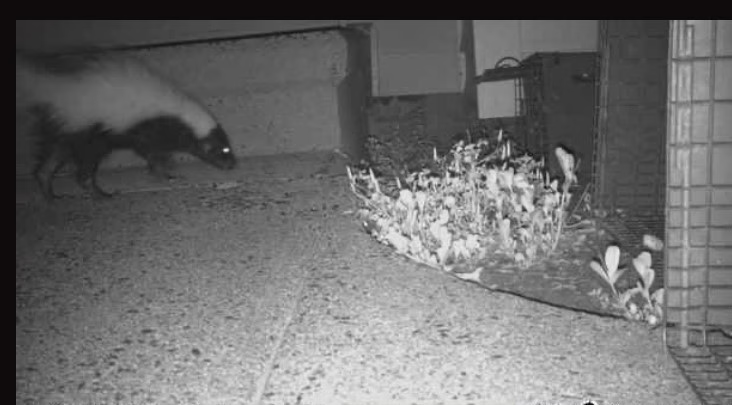
In New Milford, skunks are often active around residential neighborhoods, farms, and wooded edges.
Many infestations go unnoticed until the smell becomes strong or yard damage appears—by then, a den is usually already established.
For a complete breakdown of removal, trapping, and long-term prevention, visit our
skunk removal and exclusion in Litchfield County, CT.
Skunk Removal & Exclusion
- Inspection to locate active den areas and entry points
- Humane trapping set along travel routes and den openings
- Safe removal in accordance with Connecticut regulations
- Sealing and reinforcement to prevent re-entry
- Recommendations to eliminate attractants and reduce future issues
Skunk problems don’t resolve on their own. If the den isn’t properly removed and secured, another skunk will move right back into the same spot—especially in areas like New Milford.
Common throughout Candlewood Lake areas, wooded neighborhoods, and properties along the Housatonic River.
Call or text
860-318-1778
for professional removal and long-term exclusion.
Squirrel Removal in New Milford, CT
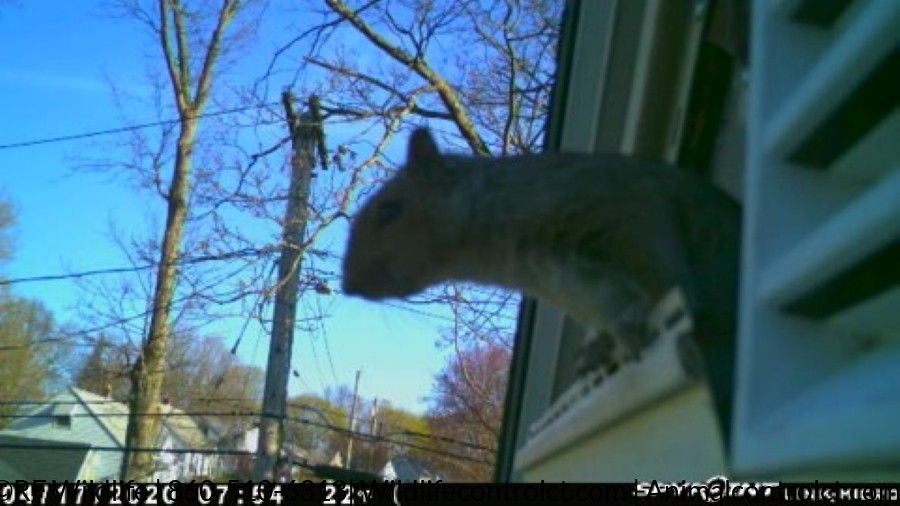
Squirrels are one of the most common attic pests in New Milford because they can climb trees, reach roof edges, and squeeze into small openings along soffits, eaves, vents, and fascia gaps. Homes with aging construction or overhanging limbs are especially vulnerable, and once squirrels discover an attic, they often return until the access point is fully secured.
Most squirrel problems start with a tiny gap near the roofline. From there, squirrels chew larger openings, build nests in insulation, and cause damage that can spread quickly if the issue is not addressed right away.
Homeowners usually notice the problem through early morning or late afternoon noise, but by then the attic may already contain nesting material, droppings, and chewed structural areas. The real fix is not just getting the animal out — it is repairing the entry point and preventing future access.
Learn more about squirrel removal and exclusion in Connecticut.
- >Inspection for entry points and attic activity >Humane removal or eviction >Damage repair and sealing >Prevention through exclusion and habitat control
Effective squirrel removal in New Milford is about stopping the damage at the source — if the roofline is not sealed correctly, the squirrels will keep coming back.
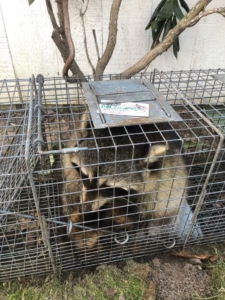
Raccoon Removal in New Milford, CT
Raccoons are one of the most common wildlife problems in New Milford, especially on homes with aging rooflines, open soffits, and chimneys. They are strong enough to force their way inside weak construction areas and often establish dens in attics where they go unnoticed until the damage is already underway.
Most raccoon entry points are found along roof edges, soffits, and chimney openings. In many cases, homeowners first notice scratching, heavy movement, or loud noise overhead before realizing a raccoon has already moved into the structure.
Raccoons can cause insulation damage, stain ceilings, tear apart vent openings, and leave behind contamination in attic spaces. If the access point is not repaired correctly, they will often try to return or another raccoon will move into the same opening later.
Learn more about raccoon removal in Litchfield County.
- >Inspection for den sites and entry points >Humane trapping and eviction >Sealing and repair of damage >Prevention
Proper raccoon removal in New Milford requires more than trapping alone — the entry point must be found, repaired, and sealed with durable materials to prevent repeat problems.
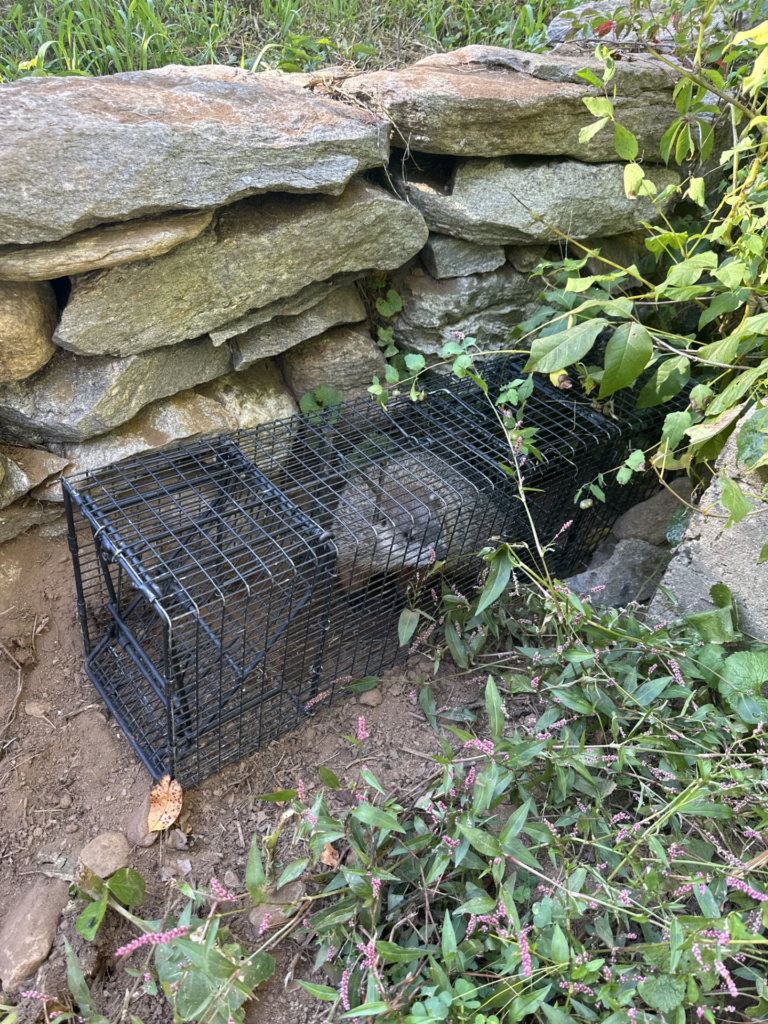
Woodchuck Removal in New Milford, CT
Woodchucks are a major burrowing problem in New Milford, especially on properties with sheds, decks, stone walls, gardens, and open ground near tree lines or brush. Their digging is aggressive and can create large underground burrow systems that are difficult to ignore once they become active.
Most woodchuck damage starts with a visible burrow opening near a foundation, shed, porch, or retaining wall. As the den grows, the animal can move more soil, enlarge the opening, and create a network of tunnels that may damage lawns, support areas, and nearby structures.
Woodchucks are known for returning to the same favorable areas if conditions remain unchanged. That means the best long-term fix is to remove the animal, address the burrow, and make the site less attractive for future digging.
Learn more about woodchuck removal in Litchfield County.
For woodchucks, exclusion and burrow repair matter just as much as removal — if the underground system is left open or weakly repaired, the problem can return fast.
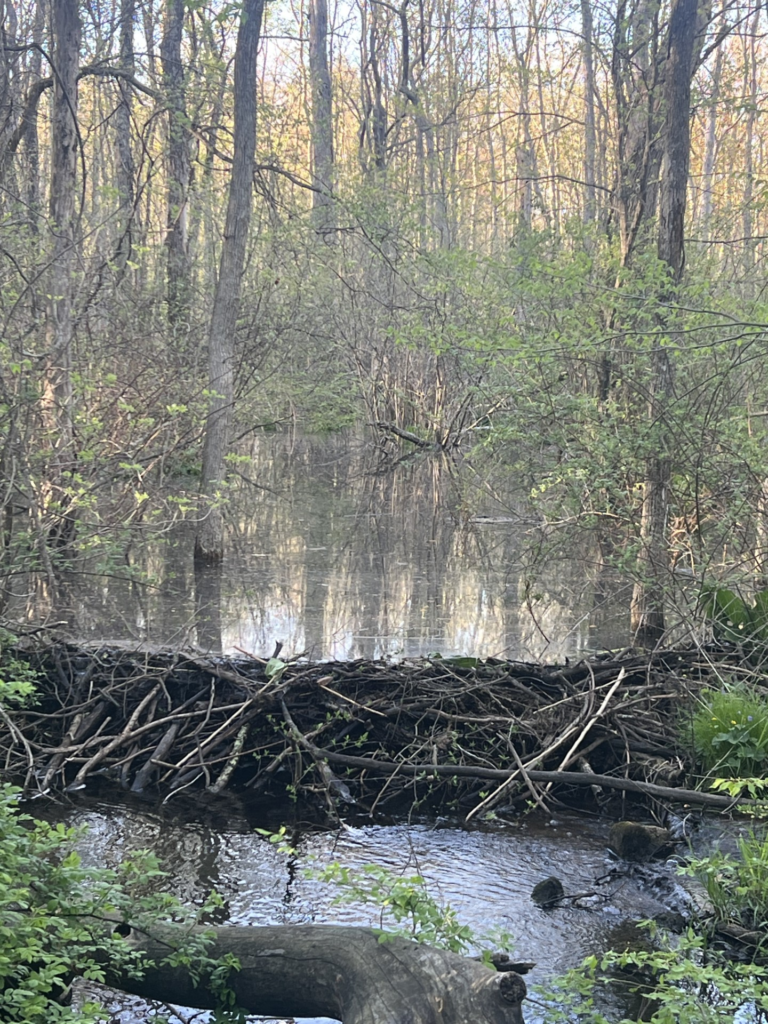
Beaver Trapping in New Milford, CT
Beavers are one of the most destructive nuisance wildlife problems in New Milford because they can alter water flow, flood low-lying areas, and damage trees and drainage systems in a very short time. Properties near the Housatonic River, Candlewood Lake tributaries, streams, ditches, and wetlands are especially vulnerable because beavers only need steady water access to establish a site.
Beaver activity can lead to flooding, tree damage, and drainage issues if not addressed early. As dams grow, water backs up behind them, culverts can become blocked, and surrounding areas may start to flood or erode. Once that starts, the damage often spreads beyond the original dam site.
In New Milford, beaver problems are often tied to repeated dam rebuilding, travel routes through brush and water edges, and shoreline areas where activity goes unnoticed until flooding becomes obvious. That is why beaver control has to be handled with a clear plan, not trial and error.
Learn more about beaver trapping in Litchfield County.
- Inspection of active beaver sites and travel routes
- Strategic trap placement based on water flow and terrain
- Removal in accordance with Connecticut regulations
- Recommendations to prevent repeat activity
Proper setup is critical—incorrect trapping attempts often fail. Effective beaver control requires understanding how the dam, water level, and movement patterns interact so the site can be resolved before more flooding or tree damage occurs.
Snake Removal in New Milford, CT
Snakes are often found near stone walls, woodpiles, and basements, but in New Milford they can also show up around sheds, garages, crawlspaces, and yard edges where cover and food are easy to find. Black snakes in particular are often tied to rodent activity, which means the snake problem may be a sign of a larger pest issue on the property.
Most snake problems are caused by habitat, shelter, and food sources rather than the snake itself. Once a property offers hiding places, rodent pressure, and small access gaps, snakes can continue to return until the conditions are corrected.
Snakes are not usually destructive to homes, but they can make a property feel unsafe and uncomfortable, especially when they appear near doors, basements, or active living areas. The safest response is to identify the species, remove the animal properly, and reduce the conditions that brought it there.
Learn more about snake control and exclusion in Connecticut.
- Inspection for hiding places, entry points, and attractants
- Removal from the structure or yard area
- Exclusion around gaps, openings, and access points
- Prevention through habitat modification
Effective snake control in New Milford depends on habitat reduction and exclusion — without that, snakes often return to the same cover, same food source, and same access points.
Opossum Removal in New Milford, CT
Opossums are commonly found under decks, sheds, crawlspaces, and porches where they can shelter out of sight and stay protected from weather and predators. In New Milford, these den sites are especially common on wooded properties, older homes, and lots with open space beneath structures.
Opossums usually choose low, dark, protected spaces that give them shelter and easy access to food. Once they settle into a crawlspace or under-structure area, they can leave behind odor, droppings, and other nuisance issues that are difficult to ignore.
While opossums are often seen as less aggressive than other nuisance animals, they still become a problem when they are living too close to the home. The best long-term solution is to remove the animal, close the opening, and reduce the conditions that made the space attractive in the first place.
Learn more about opossum control and exclusion in Connecticut.
- >Inspection for shelter areas and entry points >Removal from beneath the structure or yard area >Sealing and exclusion around access points >Prevention through cleanup and habitat changes
Effective opossum removal in New Milford requires both animal removal and exclusion — otherwise the same sheltered area can be used again almost immediately.
Local Emergency & Health Contacts in New Milford
- New Milford Health Department – (860) 355-6035
- Animal Control – (860) 355-6050
- CT Rabies Program – (860) 509-7994
Call or text Housatonic Valley Wildlife Control at 860-318-1778 for wildlife removal in New Milford.
From attic infestations to burrowing and flooding issues, wildlife problems in New Milford don’t go away on their own.
Call or text now for inspection and removal:
860-318-1778
Wildlife Removal Near New Milford, CT
- Raccoon Removal Bridgewater
- Bat Removal Brookfield
- Bat Removal Danbury
- Bat Removal Kent
- Skunk Removal New Fairfield
- Bat Removal Roxbury
- Raccoon Removal Sherman
- Raccoon Removal Washington
