Animals in your attic, under your deck, or around your property? We provide fast, professional wildlife removal and permanent solutions.
Raccoon Removal Litchfield County
Raccoon Removal & Control in Litchfield County, CT
🦝 Raccoon in Your Attic or Roof?
Raccoons tear into vents, soffits, and rooflines — damage gets serious fast. Housatonic Valley Wildlife Control provides fast, professional raccoon removal in Litchfield County.
Raccoons are one of the most aggressive and destructive wildlife problems in Litchfield County, CT, especially in homes with rooflines, soffits, and attic access points. Once they find a weak spot, they will tear through vents, rip open shingles and fascia, and force their way inside to create a den.
Inside the structure, raccoons don’t just make noise — they destroy insulation, contaminate attic spaces with waste, damage ductwork and wiring, and create serious structural issues that get worse over time. In many cases, homeowners don’t realize how extensive the damage is until a full inspection is done.
If you’re hearing heavy movement at night, scratching, or thumping sounds overhead, there’s a strong chance a raccoon has already moved in. By the time signs are noticeable, the problem is established — and it will continue to get worse without proper removal and full exclusion.
In Litchfield County, raccoon problems are especially common in older homes, properties near wooded areas, and houses with overhanging tree limbs, which give raccoons easy roof access. Once inside, they often return year after year unless every entry point is properly identified and sealed.
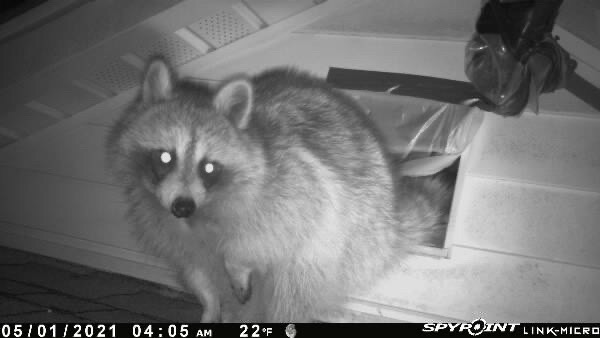
Raccoon entry damage at roof vent in Litchfield County home
Why Raccoons Are a Serious Problem in Litchfield County, CT
Raccoons are one of the most consistent and destructive wildlife problems in Litchfield County, especially in towns like New Milford, Litchfield, Kent, Salisbury, and across rural properties where wooded land meets residential homes. The combination of older construction, large rooflines, barns, and surrounding forest creates perfect conditions for raccoons to move in and stay.
Unlike smaller animals, raccoons don’t look for easy access — they create it. It’s extremely common in this area to find raccoons that have ripped open roof vents, peeled back shingles, torn through soffits, or broken into attic spaces to establish a den site.
Once inside, they don’t leave quietly. Raccoons will:
Force entry through rooflines, soffits, and vent covers
Tear apart insulation and compress attic spaces for nesting
Use the attic as a bathroom, leading to odor and contamination issues
Return to the same home year after year if entry points aren’t fully sealed
Defend den sites aggressively, especially during spring when young are present
In Litchfield County, many homes sit on larger wooded lots with overhanging trees, giving raccoons direct access to the roof. Older homes and seasonal properties are especially vulnerable, as small construction gaps often go unnoticed until significant damage has already occurred.
It’s also common to see raccoon problems tied to chimneys, attic spaces, and roof intersections, where materials weaken over time. Once a raccoon identifies a safe den location, it will continue to use that structure — and other raccoons will follow if the issue isn’t properly addressed, and older structures are especially vulnerable.
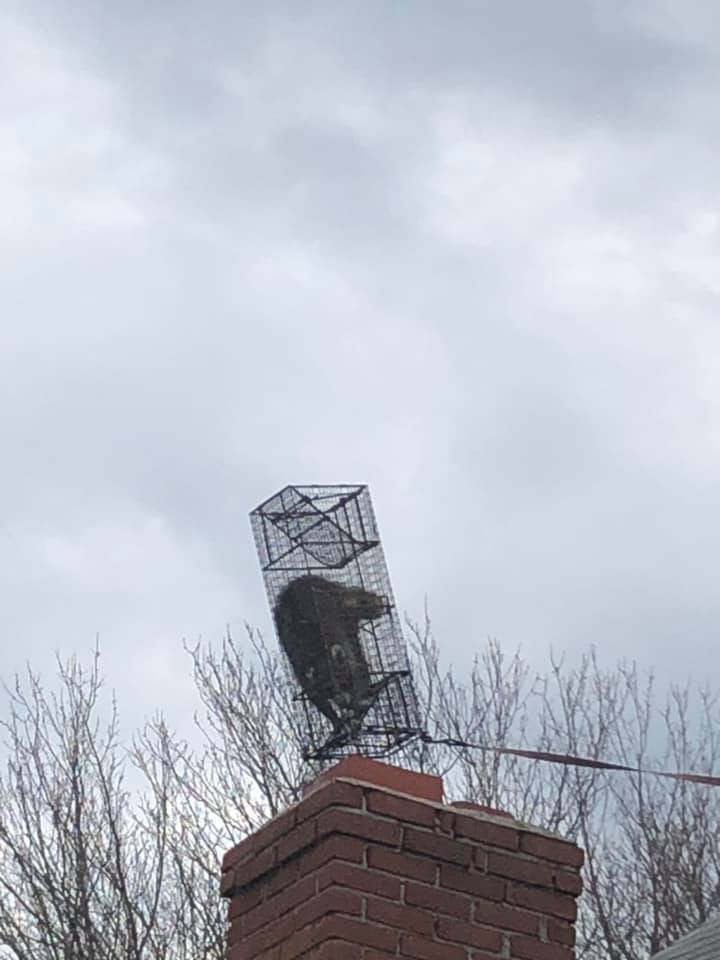
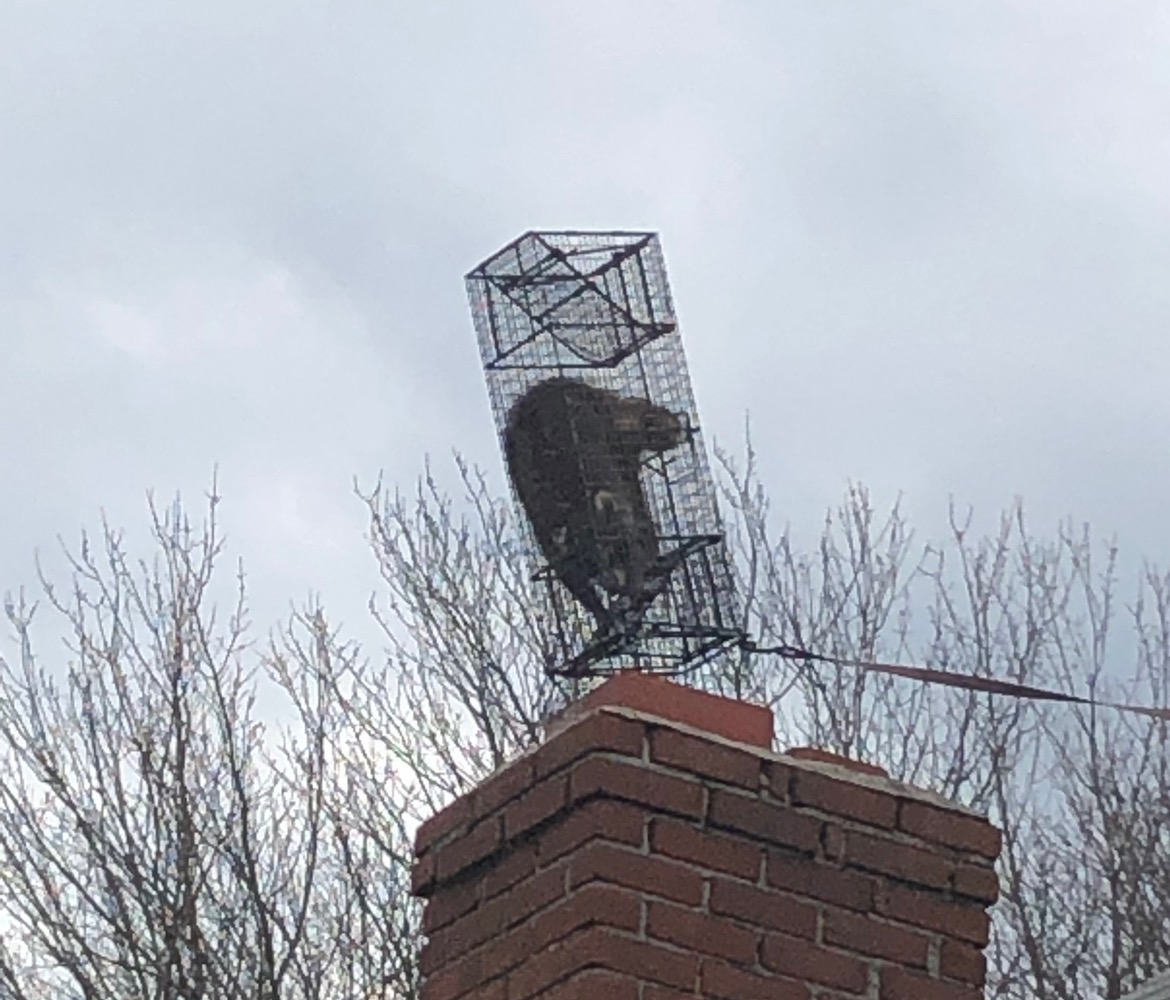
mother raccoon trapped on chimney during removal litchfield county ct
Raccoon Removed from Chimney in Litchfield County
In a recent raccoon removal in Litchfield County, a homeowner reported loud movement and vocal sounds coming from the chimney. Inspection confirmed a female raccoon had entered through an uncapped chimney and established a den site.
During spring, chimneys are one of the most common places for raccoons to raise their young. The mother was safely removed using a trap set at the chimney top, as shown above, and the chimney was then properly secured to prevent re-entry.
Situations like this are extremely common in Litchfield County, especially on homes without chimney caps. Without proper removal and sealing, raccoons will continue to return to the same structure year after year.
Common Signs of Raccoon Activity
Raccoon problems are usually obvious once you know what to listen and look for — especially at night when they’re most active.
Heavy thumping, walking, or running in the attic at night — not light scratching like mice, but loud, deliberate movement
High-pitched squeaking, chirping, or whining sounds — this is often baby raccoons, especially during spring
Overturned trash cans or scattered food around the property
Droppings in attic spaces, on roofs, or near entry points
Chewed or torn soffits, vents, fascia, and rooflines
Strong odors or visible staining around entry holes or inside the attic
In Litchfield County, raccoon breeding season typically runs from April through May. During this time, female raccoons move into attics, chimneys, and wall voids to give birth and raise their young.
Homeowners often hear:
Constant squeaking or chattering during the day (babies calling out)
Increased noise at night as the mother comes and goes to feed
Scratching or movement in the same area repeatedly as the nest is established
This is one of the most important times to handle the problem correctly — removing a mother raccoon without addressing the young can lead to trapped babies, odor issues, and even more damage inside the structure.
Raccoon problems escalate quickly. What starts as noise in the attic can turn into major structural damage, contamination, and costly repairs if not handled early and properly.
Where Raccoons Get Into Homes in Litchfield County, CT
Raccoons don’t wait for an open door — they force their way into structures by targeting the weakest points on a home. In Litchfield County, with its mix of older homes, large rooflines, and wooded properties, these entry points are extremely common.
The most frequent access points we find include:
Roof vents (ridge vents and box vents) One of the most common entry points. Raccoons will tear through vent covers or push into ridge vents, creating a direct opening into the attic.
Soffits and fascia boards Weak or aging soffits are easy for raccoons to rip open. Once they get a foothold, they can expand the opening quickly.
Roof edges and shingle lines Raccoons will peel back shingles and force entry along rooflines, especially where materials have started to wear.
Chimneys Open or uncapped chimneys are a major problem in this area. Female raccoons commonly use chimneys as safe nesting sites for their young.
Roof intersections and construction gaps Areas where different roof sections meet often develop small gaps over time. These are easy targets for raccoons to widen and enter.
Attic fans and gable vents These are frequently damaged or poorly secured, allowing raccoons to break in and access the attic space.
Crawlspaces and ground-level openings On homes with decks, additions, or older foundations, raccoons may enter from below and move upward into the structure.
Why This Matters
Most homes don’t have just one vulnerability — they have several. Raccoons will often use multiple entry points or create new ones if the original is blocked.
In Litchfield County, homes with:
overhanging tree limbs
older construction materials
low-visibility rooflines
are especially at risk.
The Key Point
Finding the animal is only part of the job. If every entry point isn’t identified and properly sealed, raccoons will return to the same structure — or break right back in.
Recent Raccoon Removal in Litchfield County
In a recent job in New Milford, a homeowner reported heavy thumping in the attic at night. Inspection revealed a raccoon had torn open a ridge vent and created a large entry point along the roofline.
Inside the attic, insulation was heavily damaged and compressed, with multiple areas of contamination. Additional weak points were found along the soffits that would have allowed further entry if left unaddressed.
The raccoon was safely removed, the damaged vent was replaced and reinforced, and all secondary entry points were sealed to prevent return.
Raccoon Removal Laws in Connecticut
Raccoon removal in Connecticut is regulated. Improper handling or relocation can make the problem worse.
No relocation of trapped raccoons
No poisons or illegal methods
Proper trapping and handling required
Professional removal ensures the job is done legally and effectively.
Raccoon Removal & Exclusion Process
Inspection — Full structural evaluation Identify active entry points, nesting areas, travel routes, and hidden vulnerabilities along rooflines, soffits, vents, and chimneys. Damage is often more extensive than it appears from the outside.
Targeted Removal — Based on activity and conditions Raccoons are removed using the safest and most effective method for the situation, including trapping or controlled eviction when appropriate.
Legal & Safe Handling — Connecticut compliant All removal is performed in accordance with Connecticut wildlife regulations, with special care taken during nesting season when young may be present.
Exclusion & Sealing — Permanent repairs All entry points are professionally sealed using durable materials designed to withstand re-entry attempts — not temporary fixes like foam or patchwork.
Prevention — Long-term protection Identify and correct the conditions that allowed the problem to occur, reducing the risk of repeat infestations and ongoing damage.
This is what makes the solution permanent.
Raccoons in Attics, Crawlspaces & Around the Property
Raccoons don’t just end up in attics — in Litchfield County they’ll use any protected space they can access to establish a den site. Once they find a safe location, they settle in, raise young, and return repeatedly unless the problem is fully corrected.
Common den and problem areas include:
Attics — torn vents, soffits, and rooflines allow direct entry
Chimneys — one of the most common nesting spots, especially for females with young
Crawlspaces — easy ground-level access under homes, decks, and additions
Sheds & garages — quiet structures with low disturbance
Barns & outbuildings — ideal long-term den sites on rural properties
Boats & seasonal structures — especially when stored or unused for long periods
Once inside, raccoons don’t stay contained to one spot. They move through insulation, wall voids, and structural gaps, creating widespread damage throughout the structure.
Homeowners in Litchfield County often deal with:
Heavy noise at night — walking, thumping, and shifting weight overhead
Chimney activity — scratching, nesting, and loud vocalization during baby season
Strong odors from urine and droppings building up in confined spaces
Insulation destruction from nesting and movement
Entry holes that continue to expand as raccoons force their way in and out
During April through May, raccoons commonly establish dens inside homes to raise young. This is when problems become more noticeable — with constant noise, increased activity, and repeated use of the same entry point.
The biggest mistake is assuming the problem is isolated. In reality, raccoons often:
Use multiple access points
Move between attic, chimney, and crawlspace
Return to the same structure year after year
Without proper removal and full exclusion, the problem doesn’t go away — it spreads and gets more expensive to fix.
Raccoon Problems in Homes Across Litchfield County
Raccoon problems in Litchfield County are strongly tied to the way homes are built and where they are located. Older homes, barns, and properties surrounded by wooded land — especially in towns like Salisbury, Sharon, Litchfield, and Washington — are especially vulnerable to attic and chimney infestations.
Large rooflines, multiple construction gaps, and overhanging trees give raccoons direct access to structures. In many cases, homeowners don’t realize how easily raccoons can reach the roof until damage has already occurred.
Seasonal homes and lower-traffic properties are also at higher risk, as raccoons can establish den sites without being disturbed for extended periods.
Why DIY Raccoon Removal Fails
Raccoon problems are rarely solved with quick fixes. In Litchfield County, most repeat infestations come from partial or incorrect removal attempts that don’t address the full problem.
Common mistakes include:
Sealing holes while raccoons are still inside This traps animals in the structure, leading to desperate damage, noise, and odor issues as they try to get out — or die inside.
Missing secondary entry points Raccoons almost always have more than one access point. Closing one hole without finding the others guarantees they’ll be back.
Using weak materials Foam, screens, and light patchwork are easily torn open. Raccoons will reopen the same entry point repeatedly if it isn’t reinforced properly.
Trapping without repairing the structure Removing the animal alone does nothing. The same opening will be reused — often within days.
Illegal relocation of raccoons Many homeowners release trapped raccoons elsewhere, which is often illegal in Connecticut and ineffective. Raccoons have strong homing instincts and can travel several miles to return to the same property.
Trap-shy behavior after failed attempts Raccoons are intelligent and learn quickly. Once caught and released, they often become much harder to trap again, making the problem more difficult and time-consuming to solve.
Why Raccoons Return to Homes in Litchfield County
Without proper removal and full exclusion, raccoons will return quickly — often within days — and the damage will continue to grow.
What Happens If You Ignore a Raccoon Problem
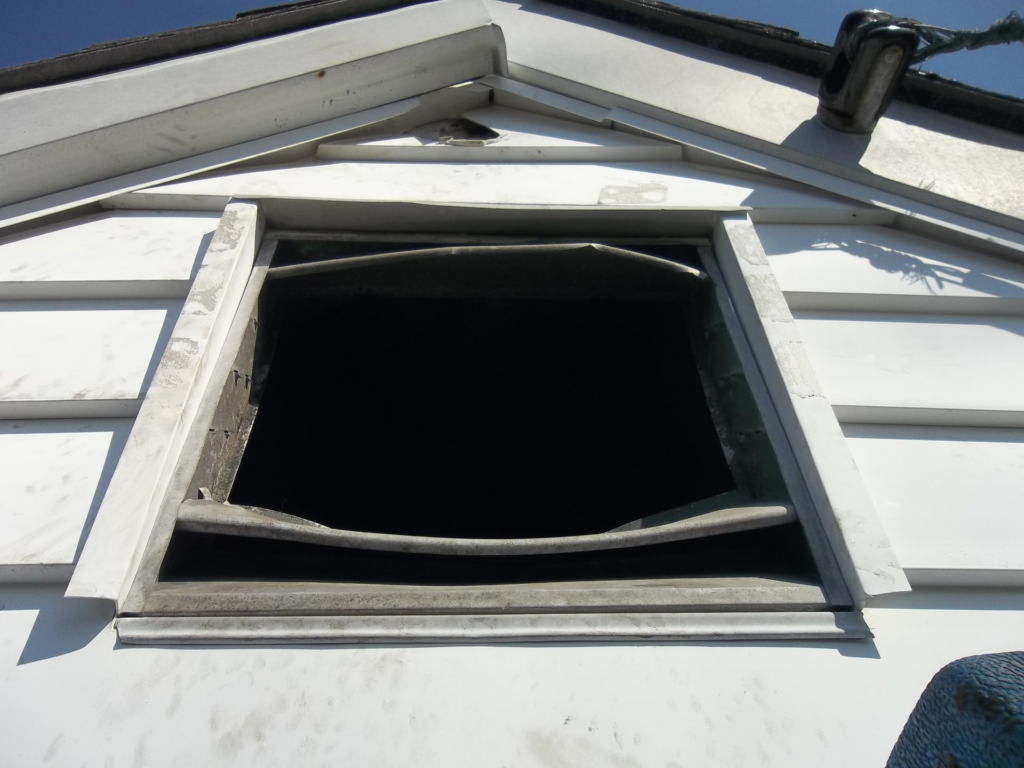
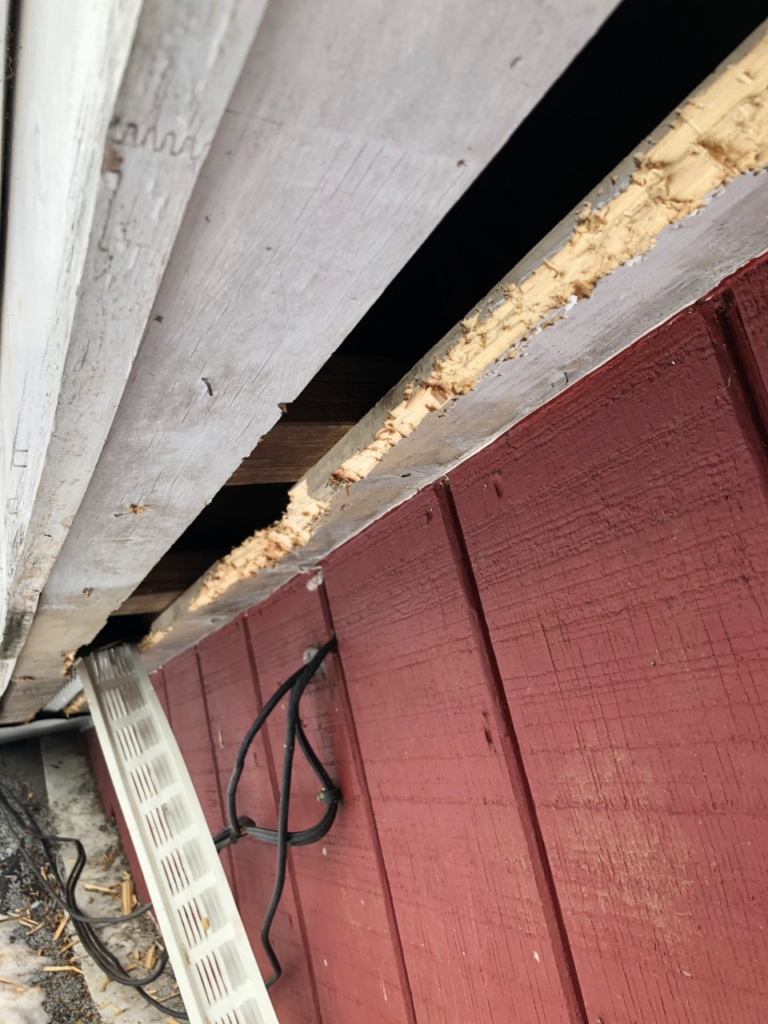
The damage in the photo above is what happens when a raccoon problem is left unchecked for too long. This was the result of years of raccoons living under a home in the crawlspace. When the homeowners eventually sealed the area without proper removal, the animals forced their way out — tearing through the soffit and vent to escape.
Raccoons don’t just “go away.” As they stay on a property, they expand their living space, weaken structural areas, and create multiple exit and entry points. When those openings are suddenly blocked, the damage often gets worse as raccoons try to break back out or find another way in.
Situations like this often lead to:
Severe soffit and vent damage from forced entry or escape attempts
Expanded structural openings that allow future infestations
Long-term contamination from urine and droppings in crawlspaces and attics
Repeated infestations when the underlying problem isn’t fully addressed
Once raccoons establish a den site, the damage continues until the problem is handled correctly. Proper removal and full exclusion is the only way to prevent situations like this from getting worse.
Raccoon Damage & Costs in Litchfield County
Raccoon problems don’t stay small. Once they get inside, damage escalates fast — especially if a den is established or young are present.
What starts as noise can turn into:
Insulation destruction — torn, compressed, and contaminated with urine and droppings
Structural damage — fascia boards, roof edges, and attic framing weakened over time
Chimney and flue issues — nesting material blocking airflow and creating fire hazards
Crawlspace contamination — strong odors and unsanitary conditions under the home
Electrical risk — chewed wiring and damaged ductwork inside attics
Severe odor problems — especially if animals are trapped or die inside
In many cases, homeowners don’t see the full extent until the problem is already advanced.
Raccoon activity in attics and chimneys is a common issue across Connecticut. For more detailed information on inspection, removal, and prevention, visit our raccoon removal guide.
What This Can Cost
Costs vary depending on how long the problem has been active, but it’s common to see:
Minor entry repair & removal: hundreds
Attic cleanup & insulation replacement: thousands
Roofline and structural repairs: thousands more
Major contamination or long-term infestation:several thousand+
Why Raccoon Damage Gets Worse Fast in Litchfield County Homes
The longer raccoons are in the structure, the more damage they cause — and the more expensive it becomes to fix.
Early removal and proper sealing is the difference between a manageable repair and a major restoration job.
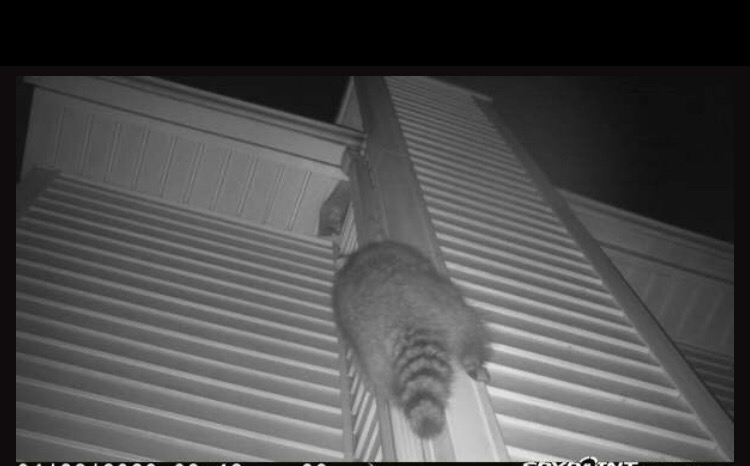
Raccoon climbing Litchfield County home. She is at the second story in this picture.
Raccoon Removal Service Areas in Litchfield County
Housatonic Valley Wildlife Control provides raccoon removal throughout Litchfield County, including:
Call or Text Housatonic Valley Wildlife Control: 860-318-1778
Fast response. Humane removal. Permanent solutions.
Raccoon Removal FAQs – Litchfield Countnty CT
How do raccoons get into attics?
Raccoons typically enter attics by tearing open roof vents, soffits, fascia boards, or weak roofline areas. In Litchfield County, overhanging tree limbs and aging construction make it easy for raccoons to access and break into homes.
What do raccoons sound like in the attic?
Raccoons make loud, heavy noises — walking, thumping, and shifting their weight. During spring, baby raccoons make high-pitched squeaking or chirping sounds, often heard during the day as they call for their mother.
When are baby raccoons born in Connecticut?
Raccoon breeding season in Connecticut typically runs from April through May. During this time, female raccoons enter attics, chimneys, and wall voids to give birth and raise their young.
Will raccoons leave on their own?
No — raccoons will not leave on their own once they establish a den site. In many cases, they return year after year unless the entry points are properly sealed after removal.
Is raccoon removal dangerous?
Yes. Raccoons can become aggressive when cornered or protecting their young. They can also carry diseases and parasites. Professional removal is recommended to handle the situation safely and legally.
Can I trap and relocate a raccoon myself?
Relocating raccoons is often illegal and ineffective. Raccoons have strong homing instincts and can return from miles away. Additionally, raccoons that have been trapped once often become harder to catch again.
How much damage can raccoons cause?
Raccoons can cause significant damage, including torn insulation, destroyed vents, roof damage, contamination from waste, and even structural issues. Costs can quickly reach thousands of dollars if the problem is not addressed early.
How do you permanently get rid of raccoons?
Permanent raccoon removal requires a combination of targeted removal and full exclusion. All entry points must be identified and sealed using durable materials to prevent re-entry.
🦝 Hearing Noise in Your Attic at Night?
Raccoons don’t leave on their own — and the damage gets worse the longer they stay.
Housatonic Valley Wildlife Control provides fast, professional raccoon removal and full exclusion in Litchfield County.