
Skunk Removal in Litchfield County, CT
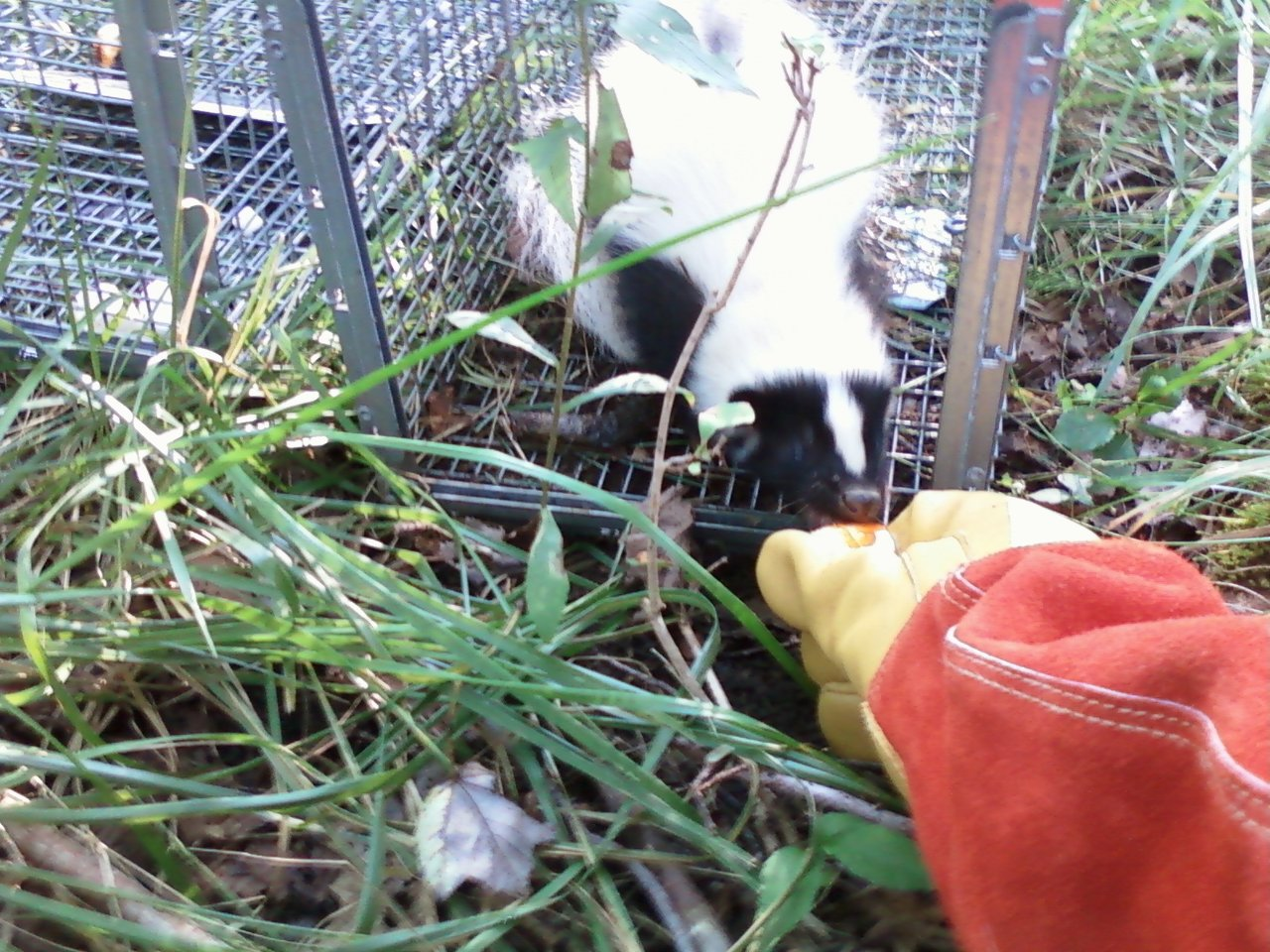
Skunks are one of the most common nuisance wildlife problems in Litchfield County, especially around decks, sheds, porches, crawl spaces, stone foundations, and wooded properties. Once a skunk moves in, the problem usually becomes obvious fast — strong odor, digging damage, and pets getting sprayed.
Housatonic Valley Wildlife Control provides skunk trapping, skunk control, and skunk exclusion throughout Litchfield County, CT. Call or text 860-318-1778 for help with skunks around your home, yard, shed, or crawl space.
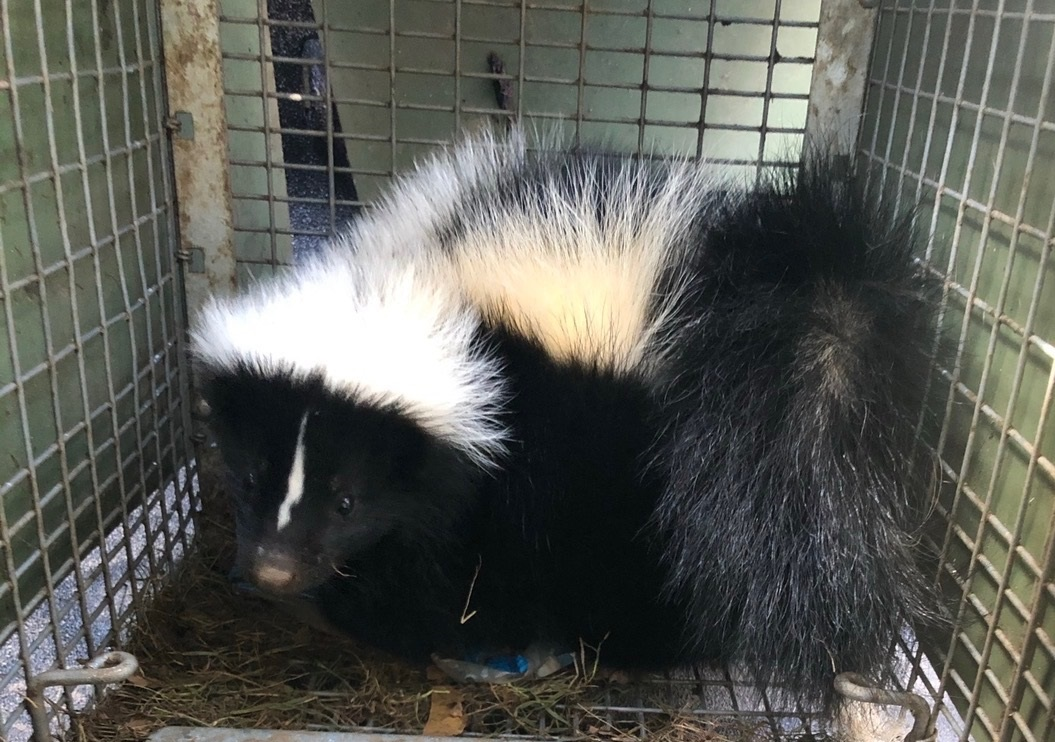
Common Skunk Problems in Litchfield County
Skunks are usually noticed because of odor, digging, or activity around a structure. In many cases, the animal has already found shelter before the homeowner realizes there is a problem.
- Strong skunk odor around the house, garage, deck, or shed
- Skunks living under decks, porches, sheds, or crawl spaces
- Pets getting sprayed in the yard
- Skunks digging small holes in lawns while feeding on grubs
- Skunks showing up on cameras, walkways, steps, or near doors
- Mother skunks denning under sheds or structures with young
Skunks are mostly nocturnal, so most activity happens at night or early morning. If you are smelling skunk odor repeatedly, seeing fresh digging, or noticing activity near a structure, it is usually time to have the property checked.
Skunks Under Sheds, Decks, Porches, and Steps
In Litchfield County, many skunk calls involve animals denning under structures. Sheds, porches, decks, front steps, barns, and crawl spaces all provide cover. Once a skunk feels safe under a structure, it may continue using that spot unless the access is blocked correctly.
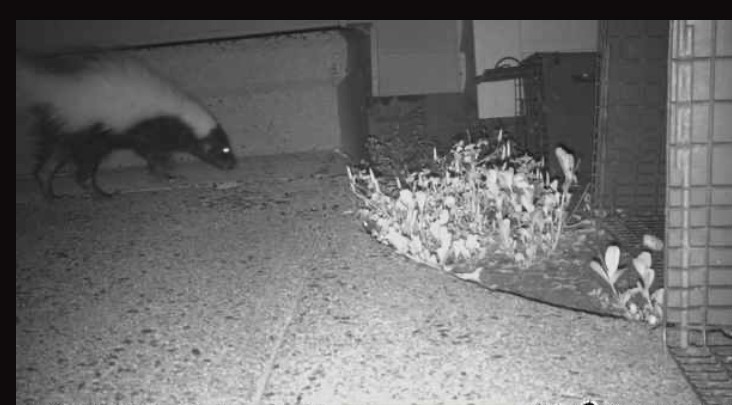
These jobs need more than just trapping. If the opening is left alone, another skunk may use the same spot later. That is why exclusion is often the most important part of long-term skunk control.
These problems don’t go away on their own — and often get worse over time.
Call or text 860-318-1778 to have it handled safely.
Skunk Trapping in Litchfield County
Skunk trapping requires careful placement, patience, and experience. A poorly placed trap can miss the animal, catch the wrong animal, or increase the chance of spraying near the home.
Housatonic Valley Wildlife Control handles skunk trapping with the goal of removing the problem safely and reducing unnecessary odor issues around the property.
- Inspection of skunk activity and travel routes
- Identification of den openings and shelter areas
- Strategic trap placement around active areas
- Skunk removal in accordance with Connecticut regulations
- Recommendations for exclusion and prevention
Skunk Exclusion and Prevention
Removing a skunk is only part of the job. If the animal was living under a deck, shed, porch, or crawl space, the entry area should usually be sealed or reinforced after removal.
Skunk exclusion may include:
- Closing access under sheds and decks
- Reinforcing crawl space openings
- Blocking access under porches or steps
- Checking for weak spots where animals can dig back in
- Reducing conditions that attract skunks to the property
Good exclusion work prevents the same problem from repeating. Skunks are opportunistic animals. If a dry, protected den site is available, it may attract another animal later.
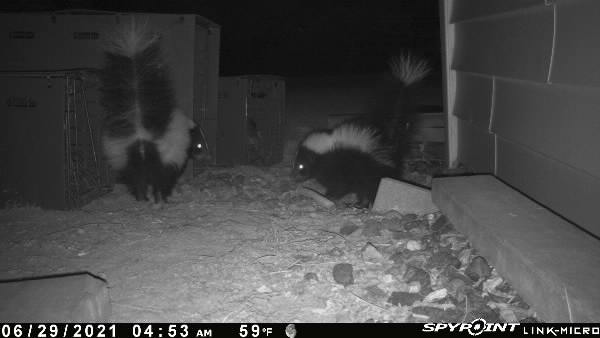
Why Skunks Are Attracted to Your Property
Skunks usually show up because the property gives them food, cover, or both. Litchfield County has plenty of wooded lots, fields, stone walls, wetlands, and older structures that can create ideal skunk habitat.
Common attractants include:
- Grubs and insects in the lawn
- Pet food left outside
- Garbage or compost access
- Open areas under sheds, decks, and porches
- Wooded edges, brush, and stone walls
Skunks are not usually aggressive, but they will spray when threatened. Dogs are often sprayed because they chase or corner the skunk before the homeowner even knows it is there.
Skunk Odor Around the House
A strong skunk smell does not always mean the animal sprayed directly at your house. Sometimes odor drifts from nearby activity. Other times, a skunk may be living under a structure or spraying after being startled by a pet or predator.
If the odor keeps coming back in the same area, especially near a deck, shed, porch, or foundation, there may be an active den nearby.
Skunk Removal Service Areas in Litchfield County
Housatonic Valley Wildlife Control provides skunk trapping and skunk control throughout Litchfield County, including:
- Skunk Removal New Milford CT
- Skunk Control Bridgewater CT
- Skunk Trapping Roxbury CT
- Skunk Removal Woodbury CT
- Skunk Control Watertown CT
- Skunk Trapping Plymouth CT
- Skunk Removal Thomaston CT
- Skunk Control Litchfield CT
- Skunk Trapping Harwinton CT
- Skunk Removal Bethlehem CT
- Skunk Control Washington CT
- Skunk Trapping Morris CT
- Skunk Removal Warren CT
- Skunk Control Kent CT
- Skunk Trapping Sharon CT
- Skunk Removal Cornwall CT
- Skunk Control Goshen CT
- Skunk Trapping Torrington CT
- Skunk Removal New Hartford CT
- Skunk Control Barkhamsted CT
- Skunk Trapping Winchester CT
- Skunk Removal Colebrook CT
- Skunk Control Norfolk CT
- Skunk Trapping Canaan CT
- Skunk Removal North Canaan CT
- Skunk Control Salisbury CT
What to Expect With Skunk Removal
Every skunk job is different. A skunk passing through the yard is not the same as a skunk living under a shed with young. The setup depends on the property, the structure, the animal’s travel pattern, and whether exclusion work is needed.
The sooner the problem is handled, the easier it usually is to prevent odor, damage, and repeated activity.
Skunk Removal Questions – Litchfield County, CT
How do I know if a skunk is living under my deck or shed?
Common signs include strong skunk odor, digging near the structure, activity at night, and pets getting sprayed. In many cases, skunks use the same entry point repeatedly once they settle in.
Will a skunk leave on its own?
Sometimes a skunk may move on, but if it has found a good den site under a deck, shed, porch, or crawl space, it will usually stay. During breeding season, they are even less likely to leave without removal.
What should I do if my dog gets sprayed by a skunk?
Bring the dog inside as soon as possible and avoid spreading the odor through the house. The skunk may still be nearby, so it is important to check the area before letting pets back outside.
Do skunks dig holes in lawns?
Yes. Skunks dig small holes while searching for grubs and insects. If you are seeing repeated digging, it often means there is a food source attracting them.
Is trapping enough to solve a skunk problem?
Trapping removes the current animal, but if the entry point under a structure is not sealed, another skunk can move in later. Exclusion is usually needed for long-term control.
Call for Skunk Removal in Litchfield County
If you have skunk odor, skunks under a shed or deck, lawn digging, or pets getting sprayed, call Housatonic Valley Wildlife Control.
Call or text 860-318-1778 for skunk removal in Litchfield County, CT.
🦨 Smelling Skunk Around Your Home?
Skunk problems don’t go away — they get worse. If there’s a den under your deck or shed, it needs to be removed and sealed properly.
Housatonic Valley Wildlife Control provides fast, professional skunk removal and exclusion in Litchfield County.
