

Bat Removal & Humane Exclusion in Litchfield County, CT
Housatonic Valley Wildlife Control provides professional bat removal in Litchfield County using legal, humane exclusion methods. No poisons. No shortcuts. Permanent solutions that stop the problem at the source.
Call or Text: 860-318-1778
Bat Problems in Litchfield County Homes
Bats are a common issue throughout Litchfield County due to the area’s wooded landscape, older homes, barns, and seasonal temperature swings. These conditions create ideal entry points along ridge vents, soffits, rooflines, and small structural gaps that often go unnoticed.
Most infestations don’t start as large colonies. A few bats find an opening, begin using it regularly, and over time more follow. Once established, colonies return to the same entry point night after night, expanding the problem inside attics, wall voids, barns, and roofline spaces.
In many cases, homeowners don’t realize there’s an issue until it has already developed. Common signs include scratching or movement at night, staining near entry points, and strong odors caused by guano buildup. As the colony grows, contamination spreads through insulation and enclosed areas, leading to more serious cleanup and repair concerns.
While bats play an important role in controlling insects, colonies inside structures create real problems. Guano accumulation can lead to odor and contamination issues, and long-term activity can damage insulation and interior spaces.
Because bats are protected in Connecticut, the problem must be handled using proper exclusion methods — not trapping or extermination. Attempting to seal openings without the correct process can trap bats inside or force them deeper into the structure, making the situation worse.
Why Proper Bat Exclusion Matters
Bat removal is not about getting rid of a single animal — it’s about identifying every active entry point and allowing the entire colony to leave safely while preventing them from getting back in.
Done correctly, exclusion solves the problem permanently. Done incorrectly, it leads to:
- Bats trapped inside walls or living spaces
- Increased odor and contamination issues
- Bats finding new entry points in the same structure
- Repeat infestations season after season
Where Bats Get Into Homes


Where Bats Get Into Homes
Bats are able to squeeze into extremely small openings along a structure, often far smaller than most homeowners expect. These gaps are typically located along rooflines and upper sections of the home, and many are difficult to detect without a full inspection.
In Litchfield County, the two most common species found in homes are the little brown bat and the big brown bat. Both species are highly adaptable to structures and regularly use homes, barns, and outbuildings as roosting sites.
- Little brown bats can enter through openings as small as 3/8 of an inch — roughly the size of a dime
- Big brown bats require slightly larger gaps, but can still enter through openings around 1/2 inch to 3/4 inch
These small gaps are often found in areas where materials meet or where construction has shifted over time. Even a minor separation along a roofline or vent can become a consistent entry point.
Common Bat Entry Points
- Roof edges, soffits, and fascia gaps
- Gable vents and ridge vents
- Siding transitions and construction seams
- Chimneys and flashing lines
- Gaps around dormers and roof intersections
These entry points are typically located high on the structure, where bats can land, crawl into the opening, and access attic spaces or wall voids.
How Bat Problems Develop
Most infestations don’t start as large colonies. A few bats locate an entry point and begin using it regularly. Because bats are creatures of habit, they return to the same opening night after night.
Over time:
- More bats locate and use the same entry point
- The colony begins to grow
- Activity increases inside attic or wall spaces
Once a roost is established, it becomes a consistent location for the colony. Without proper exclusion, the problem will continue to expand season after season.
Signs of a Bat Infestation
Bat problems are often discovered after the colony has already formed. In many cases, homeowners first notice subtle signs that gradually become more obvious.
Common signs include:
- Chirping or scratching sounds at dusk or dawn
- Guano (bat droppings) in attic spaces or along siding below entry points
- Dark staining or rub marks where bats repeatedly enter and exit
- Strong ammonia-like odor from urine buildup in enclosed areas
- Bats seen flying around the home at sunset or circling rooflines
In rural areas like Litchfield County, these issues are especially common in homes near wooded areas, water sources, barns, and older structures where entry points are more likely to exist.
Connecticut Bat Removal Laws
Bat removal in Connecticut is regulated, and these animals are protected. This means they cannot be exterminated, poisoned, or handled using typical pest control methods.
- No poisons or chemical treatments
- No trapping or relocation of colonies
- Exclusion is the only legal method
- Seasonal restrictions apply during maternity season
Maternity Season and Timing
Maternity season typically runs from June through mid-August. During this time, young bats are not yet able to fly.
If a structure is sealed during this period:
- Adult bats are locked out
- Young bats are trapped inside
- This leads to odor, contamination, and bats finding their way into living spaces
Because of this, timing is critical. Proper bat removal must be performed when the entire colony is able to exit safely, allowing for complete exclusion without creating additional problems.
Why Proper Identification and Sealing Matters
Because bats can enter through such small openings, it’s not enough to seal a single visible gap. Most structures have multiple potential entry points, and missing even one can allow bats to return.
Effective bat removal requires:
- Identifying the primary active entry point
- Locating secondary gaps that could be used later
- Sealing the entire structure, not just one area
Without full exclusion, bats will continue to use the same structure, often finding new ways back inside.
Humane Bat Exclusion Process
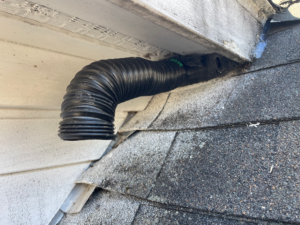

Humane Bat Exclusion Process
Proper bat removal is not a quick fix — it is a controlled, step-by-step exclusion process designed to remove the entire colony and permanently stop them from returning. Anything less than full exclusion will fail over time. Need Help with Bats in Middlesex County CT? Click Here: bat removal and exclusion.
In Litchfield County homes, bats are rarely using just one opening. They often enter through a primary gap but will take advantage of multiple secondary points along the roofline, vents, and structural seams. Missing even one of these openings can allow the problem to continue.
Step-by-Step Exclusion Process
Full Inspection
Every bat job starts with a detailed inspection of the structure. This includes identifying all active entry points, locating staining or guano buildup, determining colony size, and understanding how bats are moving in and out of the building. In many cases, what appears to be one entry point is actually part of a larger system of gaps.
One-Way Devices Installed
Specialized exclusion devices are installed over the primary entry points. These allow bats to exit safely at night but prevent them from re-entering. Proper placement is critical — incorrect setup will either fail or push bats into other areas of the structure.
Sealing the Structure
Once devices are in place, all secondary gaps, seams, and vulnerabilities are sealed. This includes soffits, ridge vents, fascia boards, roofline joints, and any construction gaps that bats can access. Materials must be durable — temporary repairs will be reopened.
Monitoring Period
Exclusion devices remain in place for several nights to ensure the entire colony has exited. This step is critical, especially for larger infestations where not all bats leave at once.
Final Removal & Verification
After confirming no activity remains, devices are removed and the structure is rechecked. At this stage, all entry points are sealed and the home is protected from re-entry.
This is the only method that permanently solves a bat problem. Simply removing bats without sealing the structure will result in repeat infestations.
Why DIY Bat Removal Fails
Bat removal is one of the most commonly mishandled wildlife problems. In most cases, DIY attempts either fail completely or make the situation worse.
Common mistakes include:
- Sealing entry points too early, trapping bats inside walls or attic spaces
- Using sprays, lights, or repellents that have no real effect
- Ignoring secondary entry points that bats will immediately use instead
- Attempting removal during the wrong time of year
When handled incorrectly, bats will:
- Move deeper into the structure
- Enter living spaces trying to escape
- Continue using the home year after year
What starts as a small issue can quickly turn into a larger contamination and access problem.
Bat Removal Costs in Litchfield County
Bat exclusion costs vary depending on the structure, level of activity, and how many areas need to be sealed.
Typical projects range from $600 to $3,500+, depending on:
- Home size and roof complexity
- Height and access (ladders vs. lift equipment)
- Number of active and potential entry points
- Condition of soffits, vents, and roofline materials
- Extent of contamination and cleanup needs
Larger homes, barns, and properties with multiple structures tend to fall on the higher end due to increased labor and sealing requirements.
Because every structure is different, a full inspection is required to determine the exact scope of work.
Bat in the House – What To Do
If a bat is flying inside your home, do not panic — but take the situation seriously.
Situations that require extra caution include:
- A bat found in a room with a sleeping person
- Possible contact with a child or pet
- A bat seen but not located afterward
In these cases, local health authorities may recommend rabies testing as a precaution.
If no contact occurred:
- Isolate the room immediately
- Close interior doors
- Open a window to allow the bat to exit
- Avoid direct contact
If the bat does not leave or cannot be safely managed, professional removal is recommended.
Why Bat Problems Are Increasing
Bat activity in residential structures has become more common in recent years, especially in areas like Litchfield County.
White-Nose Syndrome has reduced populations of some species, while others — particularly those that adapt well to human structures — continue to rely on homes, barns, and buildings for roosting.
As a result:
- More bats are using attics and enclosed spaces
- Infestations are becoming more common in residential areas
- Colonies are more likely to return to the same structure year after year
Homes with aging construction, wooded surroundings, and accessible rooflines are especially vulnerable.
Why Proper Exclusion Matters
Bat problems are not solved by removing animals alone — they are solved by fixing the structure.
If entry points are not properly identified and sealed:
- Bats will return
- New colonies will move in
- The same problem will repeat
Proper exclusion ensures:
- The entire colony is removed safely
- All access points are eliminated
- The structure is protected long-term
Bat Removal Service Areas in Litchfield County
Housatonic Valley Wildlife Control provides bat removal and exclusion throughout Litchfield County, including:
- Bat Removal New Milford
- Bat Removal Bridgewater
- Bat Removal Roxbury
- Bat Removal Woodbury
- Bat Removal Watertown
- Bat Removal Plymouth
- Bat Removal Thomaston
- Bat Removal Litchfield
- Bat Removal Harwinton
- Bat Removal Bethlehem
- Bat Removal Washington
- Bat Removal Morris
- Bat Removal Warren
- Bat Removal Kent
- Bat Removal Sharon
- Bat Removal Cornwall
- Bat Removal Goshen
- Bat Removal Torrington
- Bat Removal New Hartford
- Bat Removal Barkhamsted
- Bat Removal Winchester
- Bat Removal Colebrook
- Bat Removal Norfolk
- Bat Removal Canaan
- Bat Removal North Canaan
- Bat Removal Salisbury
Call for Bat Removal in Litchfield County


Call or Text Housatonic Valley Wildlife Control: 860-318-1778
Humane bat exclusion. Permanent solutions. Done the right way.
